Every American region harbors stories that make locals proud and spark curiosity in visitors. From Fresno’s mysterious cryptids to Bay Area legends, these cultural treasures inspire vibrant shirt designs that go beyond ordinary fashion. Nearly 60 percent of Americans say local folklore shapes their identity and sense of belonging. Discover how understanding your hometown’s traditions and tales can lead to authentic apparel that honors your roots and supports a veteran-owned business.
Table of Contents
Quick Summary
| Key Point |
Explanation |
| 1. Research Local Culture |
Understand unique stories and traditions to inspire designs. |
| 2. Create Mood Boards |
Document findings with visual materials that capture local essence. |
| 3. Sketch Diverse Concepts |
Experiment with various interpretations of local cultural elements. |
| 4. Choose Quality Materials |
Select fabrics and print techniques that honor local heritage. |
| 5. Review for Authenticity |
Ensure designs respectfully represent local culture before finalization. |
Step 1: Research Local Culture and Folklore
Designing shirts with regional flair starts with understanding the soul of your local community. This means diving deep into the unique stories, traditions, and cultural nuances that make your area special. Regional culture represents a profound narrative waiting to be transformed into wearable art.
Begin your research by exploring local museums, historical societies, and community archives. Talk to longtime residents who can share firsthand stories about neighborhood legends, cultural practices, and historical events that define your region. Look for unique symbols, artwork, architectural styles, and folklore that capture the essence of your local identity. Pay special attention to indigenous artwork, local landmark imagery, regional wildlife, and community celebrations that represent your area’s distinctive character. Local historical backgrounds offer rich design inspiration that goes beyond surface level aesthetics.
Document your findings through photographs, sketches, and detailed notes. Create a mood board that captures the visual and emotional landscape of your region. Consider elements like color palettes inspired by local landscapes, typography reflecting regional signage, and imagery that speaks to community pride. This research phase is crucial for developing authentic designs that resonate with local residents and celebrate your area’s unique cultural spirit.
Pro tip: Connect with local cultural centers or historical societies to gain deeper insights and potentially access archival materials that can inspire truly unique shirt designs.
Here’s a summary of sources for authentic local shirt inspiration:
| Information Source |
Type of Insight |
How to Access |
| Museums |
Historical context |
Visit exhibits, talk to curators |
| Community Archives |
Local traditions |
Request archival material |
| Indigenous Artists |
Symbolic motifs |
Attend workshops, arrange interviews |
| Neighborhood Residents |
Personal stories |
Conduct informal community interviews |
| Cultural Centers |
Unique celebrations |
Participate in local events |
Step 2: Brainstorm Authentic Shirt Concepts
Transforming your local cultural research into compelling shirt designs requires creative vision and thoughtful interpretation. Authentic design concepts emerge from cultural narrative reinterpretation, turning regional stories into wearable art that sparks conversation and connection.
Start by sketching visual concepts that capture your region’s unique character. Look for symbolic elements that resonate deeply with local identity such as indigenous patterns, historical landmarks, regional wildlife, or community emblems. Consider how traditional motifs can be modernized through graphic design techniques. For instance, an old architectural detail from a local historic building could become a stylized graphic element, or a traditional weaving pattern could inspire an abstract geometric shirt design. Indigenous cultural motifs provide distinctive visual identities that transform ordinary apparel into meaningful cultural statements.

Remember that authenticity comes from respect and nuanced understanding. Avoid stereotypical representations and instead seek designs that genuinely reflect local spirit. Collaborate with local artists or cultural experts if possible to ensure your interpretations are sensitive and accurate. Sketch multiple concepts, experiment with color palettes inspired by local landscapes, and create mood boards that capture the essence of your region’s visual language.
Pro tip: Photograph your initial sketches and seek feedback from community members to validate the cultural resonance of your shirt design concepts.
Step 3: Sketch Design Ideas with Local Themes
Transforming your cultural research into visual designs requires a delicate balance of creativity and respect. Sketching local themes involves translating cultural stories into compelling graphic representations that capture the essence of your region’s identity.
Start by creating rough sketches that explore different ways of interpreting local cultural elements. Use simple pencil or digital drawing tools to experiment with various design approaches. Heritage preservation requires balancing traditional motifs with contemporary graphic design principles. Look for ways to abstract traditional symbols into modern graphic elements. Consider how a local landmark’s architectural detail could become a geometric pattern, or how a traditional craft technique might inspire a unique textural element in your shirt design.
Develop multiple concept sketches that approach your local theme from different angles. Try simplifying complex cultural symbols into minimalist graphics, or explore more intricate detailed representations. Pay attention to how different stylizations communicate different emotional tones. A delicate line drawing might feel more reverent, while a bold graphic approach could communicate energy and contemporary relevance. Experiment with scale, color blocking, and negative space to create designs that feel both authentic and fresh.
Pro tip: Create a digital folder to archive your initial sketches so you can track your design evolution and revisit promising concepts later.
Step 4: Digitize and Refine Your Artwork
Transforming your hand sketches into digital designs requires precision and creative interpretation. Digitizing artwork helps preserve cultural motifs while allowing for sophisticated refinement and adaptation to modern design requirements.
Open your preferred graphic design software like Adobe Illustrator or Procreate and begin tracing your most promising sketches. Use vector tools to convert your hand drawings into scalable digital graphics that maintain the integrity of your original concept. Pay close attention to line weights, color palettes, and how different digital techniques can enhance your original sketch. Digital storytelling technologies offer immersive design refinement that can help you experiment with various artistic interpretations of your cultural themes. Consider how different color treatments or graphic effects might highlight specific cultural elements without losing their authentic essence.
Experiment with multiple design variations to find the most compelling representation of your local theme. Try inverting colors, adjusting opacity, and playing with graphic textures that complement your original sketch. Seek feedback from community members or cultural experts who can provide insights into how well your digital design captures the spirit of the original cultural inspiration. Ensure that each iteration maintains respect for the cultural narrative while presenting a fresh and engaging visual language.
Pro tip: Save multiple versions of your design with descriptive file names to track your creative process and easily revert to previous iterations if needed.
Step 5: Select Materials and Print Options
Choosing the right materials and print techniques is crucial for transforming your cultural design into a wearable piece of art that honors local heritage. Material selection reflects cultural authenticity and requires thoughtful consideration of both aesthetic and functional qualities.
Start by exploring fabric options that complement your design and align with regional characteristics. Consider natural fibers like cotton or locally sourced textiles that connect your shirt to the area’s textile traditions. Examine print techniques such as screen printing, digital printing, or specialty methods like discharge printing that can enhance your design’s visual impact. Traditional folk elements integrate with modern production to create garments that tell a meaningful cultural story. Pay attention to how different print methods interact with your chosen fabric color and texture to highlight the intricate details of your design.
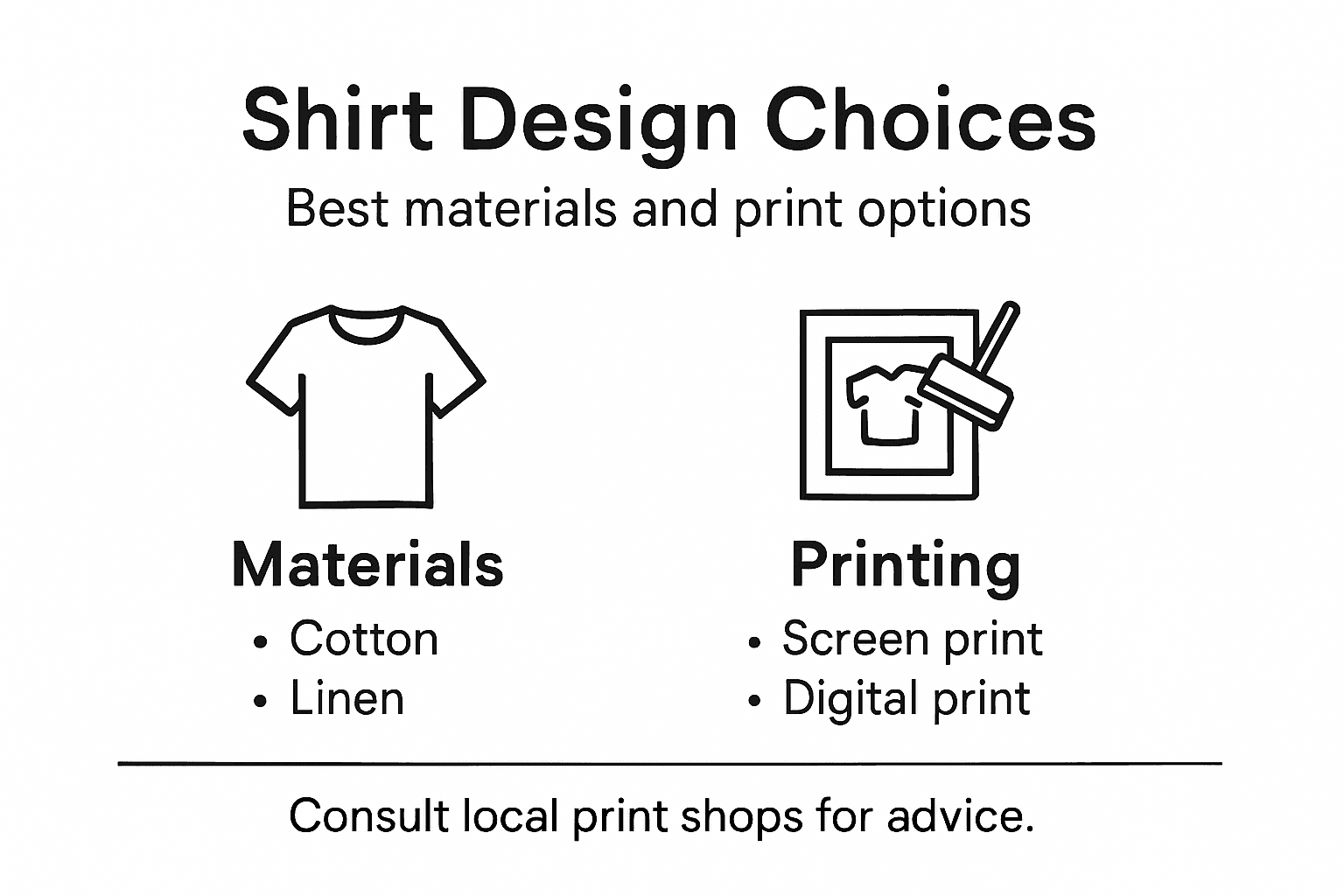
Consult with local print shops that specialize in high quality artisan printing. Request sample swatches and test prints to evaluate how your design translates across different materials and printing techniques. Consider factors like color vibrancy, fabric weight, and how the print will hold up after multiple washes. Your goal is to create a shirt that not only looks great but also serves as a durable representation of local cultural pride.
Pro tip: Request a test print on a similar fabric to your final selection to ensure color accuracy and design clarity before committing to a full production run.
Compare common shirt printing techniques for cultural designs:
| Printing Method |
Durability |
Best For |
Possible Limitations |
| Screen Printing |
High |
Bold, simple graphics |
Limited color blending |
| Digital Printing |
Moderate |
Intricate, multi-color art |
Costlier for small runs |
| Discharge Printing |
Very High |
Soft hand, vintage look |
Suits only natural fibers |
Step 6: Review and Approve Final Shirt Design
The final design review is your opportunity to ensure that every visual element authentically represents your region’s cultural spirit. Final design review focuses on cultural authenticity and demands a critical yet appreciative eye for detail.
Carefully evaluate your design across multiple dimensions. Check that the color palette genuinely reflects local landscapes or traditional artistic styles. Verify that symbolic elements are accurately represented and respectfully interpreted. Design inspiration sources include cultural traditions that require nuanced understanding and thoughtful representation. Examine how graphical elements interact with the shirt fabric and print technique. Consider seeking feedback from local cultural experts or community members who can provide authentic perspectives on your design’s integrity and emotional resonance.
Prepare to make final adjustments that might emerge from your review process. Sometimes minor refinements can dramatically improve a design’s cultural authenticity. Look closely at line weights, color saturation, and how different design elements communicate together. Your goal is a shirt that feels like a genuine tribute to your region truly resonates with people who share that cultural background.
Pro tip: Create a side-by-side comparison of your original research materials and final design to ensure you have maintained the core cultural narrative throughout your design process.
Celebrate Your Region with Authentic Local Shirt Designs
Designing shirts that capture the true spirit of your local culture can be challenging when you need authentic artwork, meaningful motifs, and a deep respect for regional heritage. This article highlights important steps like researching local folklore, sketching genuine design ideas, and choosing materials that honor tradition. If you want to turn these insightful concepts into high-quality apparel that celebrates regional pride and cryptid legends, JuustAShirtCo has you covered.
Our veteran-owned, print-on-demand platform specializes in custom-designed apparel that reflects the unique culture of Fresno, the Bay Area, and beyond. From cozy hoodies to T-shirts showcasing local landmarks and folklore, every piece is made with care and cultural authenticity. Explore our collections to find designs inspired by the very storytelling and artistry this article encourages, bringing your regional flair to everyday wear.
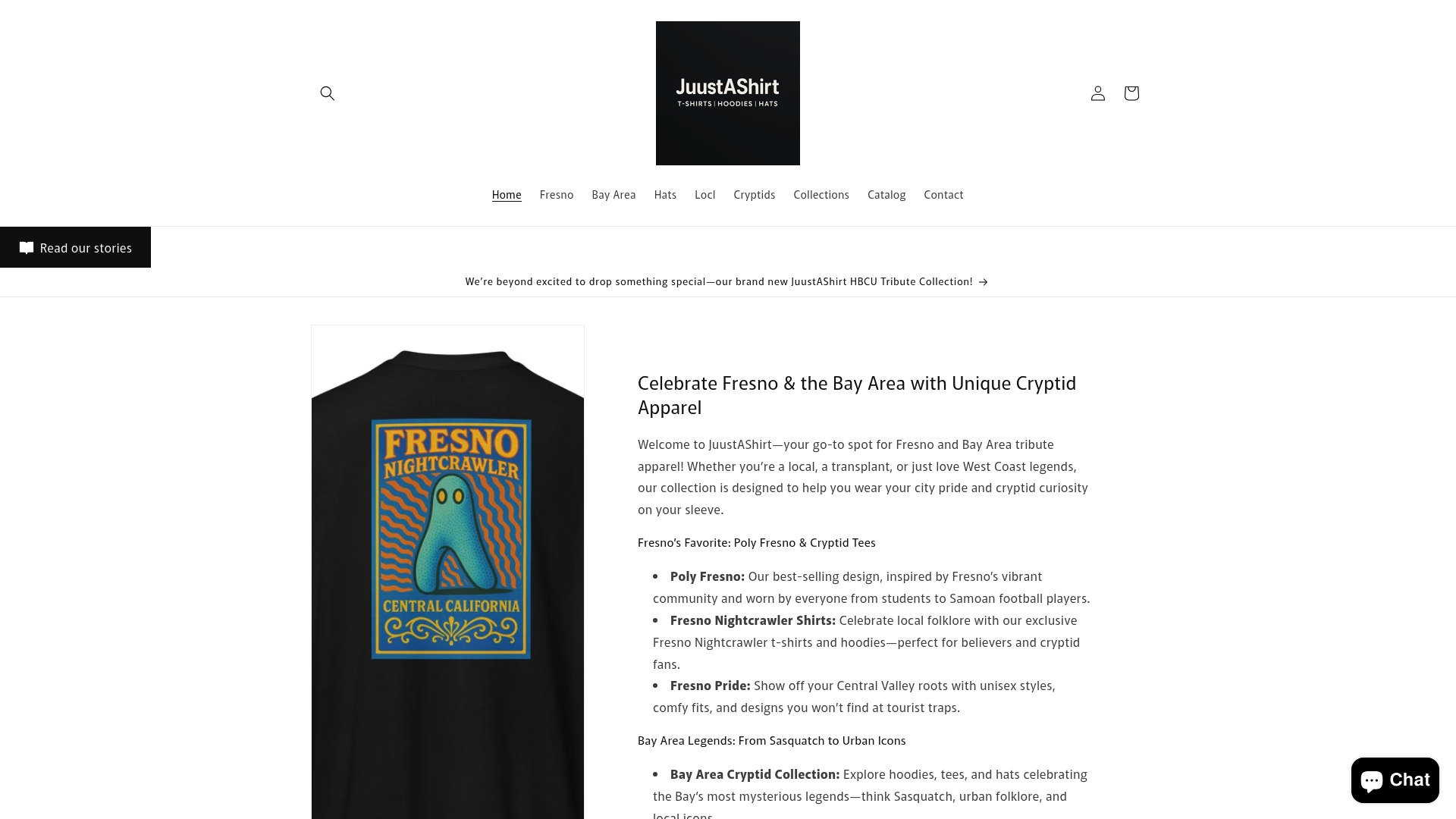
Ready to wear your local pride with style and respect for cultural narratives Transform your passion into apparel today by visiting JuustAShirtCo. Discover authentic, regionally inspired designs and support a small business committed to honoring your community’s stories. Start browsing now and find that perfect shirt that speaks to your heart and your heritage.
Frequently Asked Questions
How can I research local culture for shirt design?
To research local culture for shirt design, begin by exploring museums, historical societies, and community archives. Talk to longtime residents for personal stories and insights, which can inspire unique design elements.
What elements should I consider for creating authentic shirt concepts?
Consider incorporating symbolic elements that resonate with local identity, such as indigenous patterns, historical landmarks, and regional wildlife. Brainstorm design ideas by sketching various interpretations of these cultural themes.
How do I digitize my shirt design sketches?
To digitize your shirt design sketches, use graphic design software to trace and convert your hand-drawn illustrations into scalable digital graphics. Focus on maintaining the integrity of your original concept while enhancing it for modern production techniques.
What printing techniques are best for culturally themed shirts?
The best printing techniques for culturally themed shirts include screen printing for bold designs and digital printing for intricate, multi-color art. Choose a method that complements your design and fabric choice, ensuring high durability and visual appeal.
How can I ensure my final shirt design accurately reflects local culture?
Ensure your final shirt design reflects local culture by reviewing the elements for authenticity and emotional resonance. Seek feedback from community members or cultural experts to validate your design choices and make any necessary adjustments.
Recommended


