Finding apparel that truly speaks to your identity can feel impossible when generic California designs ignore the stories of Fresno and the Bay Area. California streetwear stands out for its roots in authentic community expression, blending influences from music, art, and local folklore with skate and surf scenes. If you crave streetwear that feels personal and represents your region, this guide unpacks what makes real California pieces matter and how to spot authenticity in a culture built to celebrate your hometown.
Table of Contents
Key Takeaways
| Point |
Details |
| Authentic Local Identity |
California streetwear thrives on celebrating regional stories, local folklore, and community pride, making it a form of cultural resistance. |
| Cultural Significance |
Wearing streetwear that reflects genuine heritage connects individuals to their community and reinforces shared narratives. |
| Three Core Elements |
Successful California streetwear combines bold graphics, comfort, and exclusivity, creating meaningful and desirable apparel. |
| Support Local Creators |
Choosing regionally-focused streetwear fosters economic growth for local creators who reflect authentic regional identities. |
Defining California Streetwear Culture and Purpose
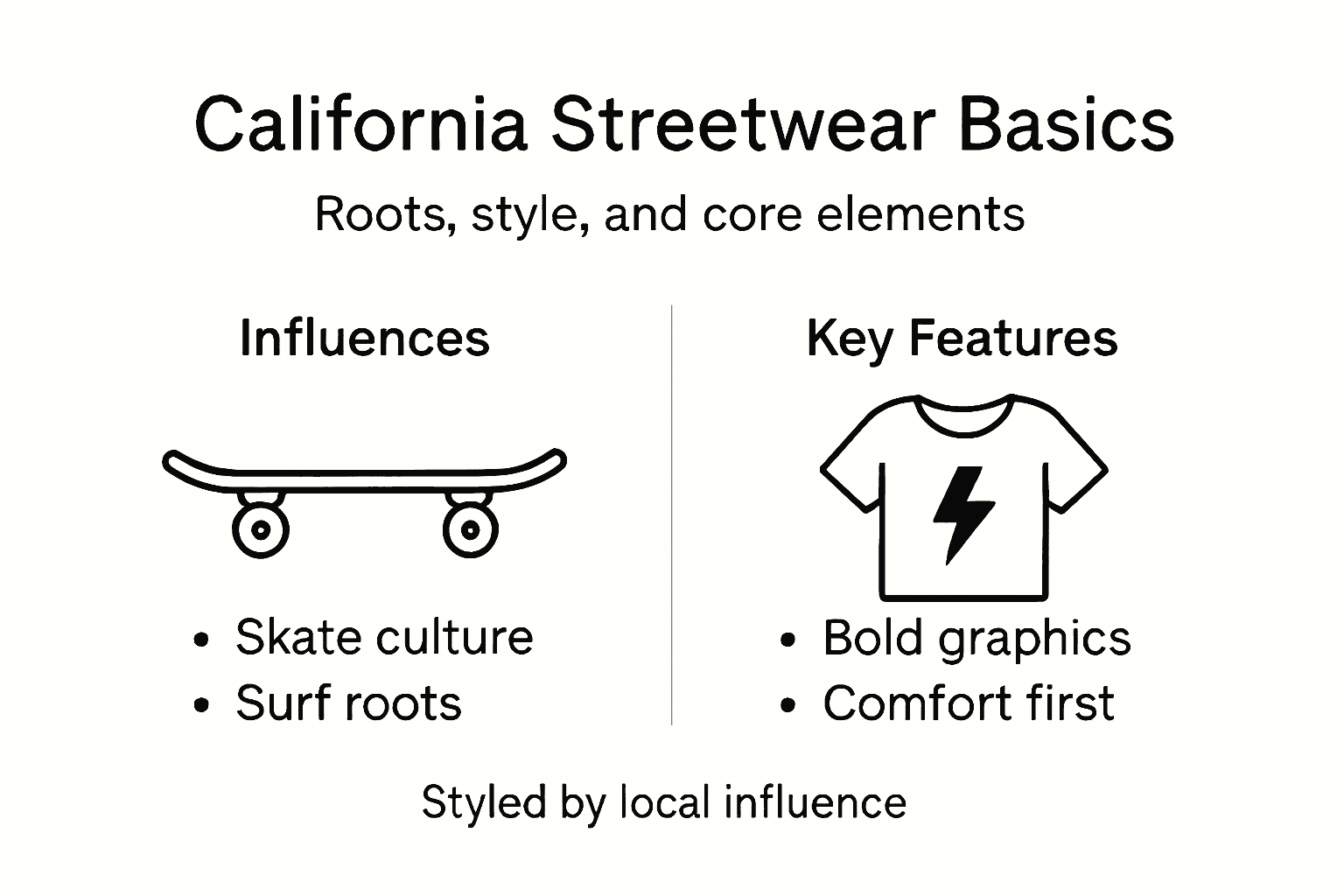
California streetwear is far more than just t-shirts and hoodies. It’s a cultural language born from the streets of Los Angeles, San Francisco, and beyond, where marginalized youth transformed fashion into rebellion. What makes California streetwear distinct is its roots in authentic community expression, deeply intertwined with hip-hop culture, the skate scene, and surf aesthetics that define the region. Unlike mainstream fashion dictated by runways and corporate boardrooms, California streetwear emerged from DIY ethics and grassroots movements where young people of color created something entirely their own. This isn’t accidental styling. It’s intentional storytelling woven into fabric, reflecting lived experiences, socioeconomic realities, and regional pride that outsiders tried to emulate but often failed to understand.
The purpose of California streetwear extends beyond personal style into political and social commentary. When you wear a piece that celebrates your hometown or embraces cryptid folklore from your region, you’re participating in something larger than yourself. You’re claiming space in a culture that historically excluded your voice. For residents of Fresno and the Bay Area, this means wearing apparel that speaks to your specific identity, not generic designs mass-produced for consumption. Local pride worn through streetwear connects you to a lineage of artists, musicians, and creators who used clothing as a medium for expression when other platforms weren’t available. The DIY spirit that defines California streetwear values authenticity and community over profit, which is why custom-designed pieces celebrating real places and legendary stories matter more than designer labels. Your hoodie isn’t just keeping you warm. It’s a wearable declaration of who you are and where you’re from.
Authenticity remains the core tension in California streetwear culture today. As mainstream brands commercialize streetwear aesthetics without understanding their cultural origins, the movement risks losing its meaning. Education about streetwear’s roots, the innovators who created it, and the communities it represents becomes essential to preserving its purpose. When you choose apparel that celebrates actual regional folklore, local landmarks, and genuine community stories over trend-chasing knockoffs, you protect that authenticity. This is where understanding California’s cultural identity through apparel becomes personal. You’re voting with your wardrobe, supporting creators who know your region’s real history, and rejecting the diluted versions that strip away meaning for aesthetics alone.
Pro tip: Look for apparel featuring specific local stories, cryptid legends, or real neighborhood details unique to your area rather than generic California imagery. This ensures your streetwear choice reflects authentic regional identity and supports creators genuinely connected to the communities they represent.
Roots in Skate, Surf, and Hip-Hop Scenes
California streetwear didn’t emerge from fashion houses or trend forecasters. It came from the concrete skate parks, sun-soaked beaches, and inner-city neighborhoods where young people refused to follow rules. The skate and surf cultures that exploded across California in the 1970s and 1980s created an entirely different way of thinking about clothing. These weren’t communities obsessed with status symbols or designer labels. Skaters and surfers needed functional gear that wouldn’t tear when they bailed on concrete or got soaked in saltwater. More importantly, they needed clothing that reflected their identity as outsiders, rebels, and artists. The skate and surf lifestyle shaped streetwear’s foundation by introducing the concept that what you wore communicated who you were and what you stood for. Freedom, nonconformity, and creative innovation became the core values embedded in every piece.
Then hip-hop arrived, and everything accelerated. When hip-hop culture exploded in the 1980s, particularly in California cities like Los Angeles and Oakland, it collided with skate and surf aesthetics in ways that transformed streetwear completely. Hip-hop brought bold graphic designs, oversized silhouettes, and an unapologetic street credibility that reflected the lived experiences of Black and Brown youth. This wasn’t just music. It was a cultural movement that used clothing as a statement. Where skate and surf culture emphasized comfort and functionality, hip-hop added visual storytelling through graphics, logos, and messaging that spoke to community, struggle, and celebration. The fusion created something entirely new. Oversized hoodies became canvases for art. T-shirts transformed into wearable manifestos. Snapbacks and beanies weren’t just functional. They were badges of allegiance. Hip-hop’s influence injected cultural messaging into streetwear design, creating pieces that communicated your values, your crew, your neighborhood, and your resistance to mainstream culture.
What makes this combination distinctly Californian is how these three elements merged without one dominating the others. You see it in the aesthetics today: comfortable, functional pieces with bold graphics and cultural messaging. You see it in the attitude: respect for the craft, authenticity over trends, community over individual clout. For residents of Fresno and the Bay Area, this history matters because it explains why generic California apparel feels hollow. A streetwear piece that celebrates your actual region, that tells real stories about your neighborhood or cryptid folklore, carries the DNA of those original skate, surf, and hip-hop communities. It’s rooted in rebellion and self-expression rather than corporate marketing. When you choose apparel that honors these roots, you’re not just wearing something comfortable with cool graphics. You’re participating in a lineage of creators who understood that clothing could be a form of resistance, art, and community building all at once.
Pro tip: Look for streetwear pieces that balance functional comfort with bold design elements and meaningful storytelling. This combination of skate practicality, surf aesthetics, and hip-hop cultural messaging is what separates authentic California streetwear from trend-driven imitations.
To better understand the influences driving California streetwear, compare the signature traits from skate, surf, and hip-hop cultures:
| Cultural Influence |
Key Style Traits |
Typical Materials |
Lasting Impact |
| Skate |
Loose fits, durable designs |
Sturdy cotton, canvas |
Function-first, rebellious ethos |
| Surf |
Relaxed silhouettes, sun-inspired colors |
Lightweight knits, tees |
Easygoing attitudes, beach graphics |
| Hip-Hop |
Bold graphics, oversized styles |
Heavyweight cotton, denim |
Cultural storytelling, visual messaging |
Core Elements: Graphics, Comfort, and Exclusivity
California streetwear succeeds because it nails three non-negotiable elements that work together like a perfect three-piece outfit. First, there’s the graphics. Not subtle embroidery or understated logos. We’re talking bold, unapologetic designs that make a statement the moment someone sees you. These aren’t random images slapped onto fabric. They’re carefully crafted visual stories. A graphic might feature your hometown’s silhouette, a cryptid that haunts your region, or imagery that communicates your values and crew loyalty. Bold graphic designs serve as storytelling and branding within California streetwear, creating immediate identity and connection. When you wear a piece with a striking graphic, you’re broadcasting who you are and what community you belong to without saying a single word. That’s the power of streetwear graphics. They’re functional communication tools that transform a basic garment into a cultural statement.
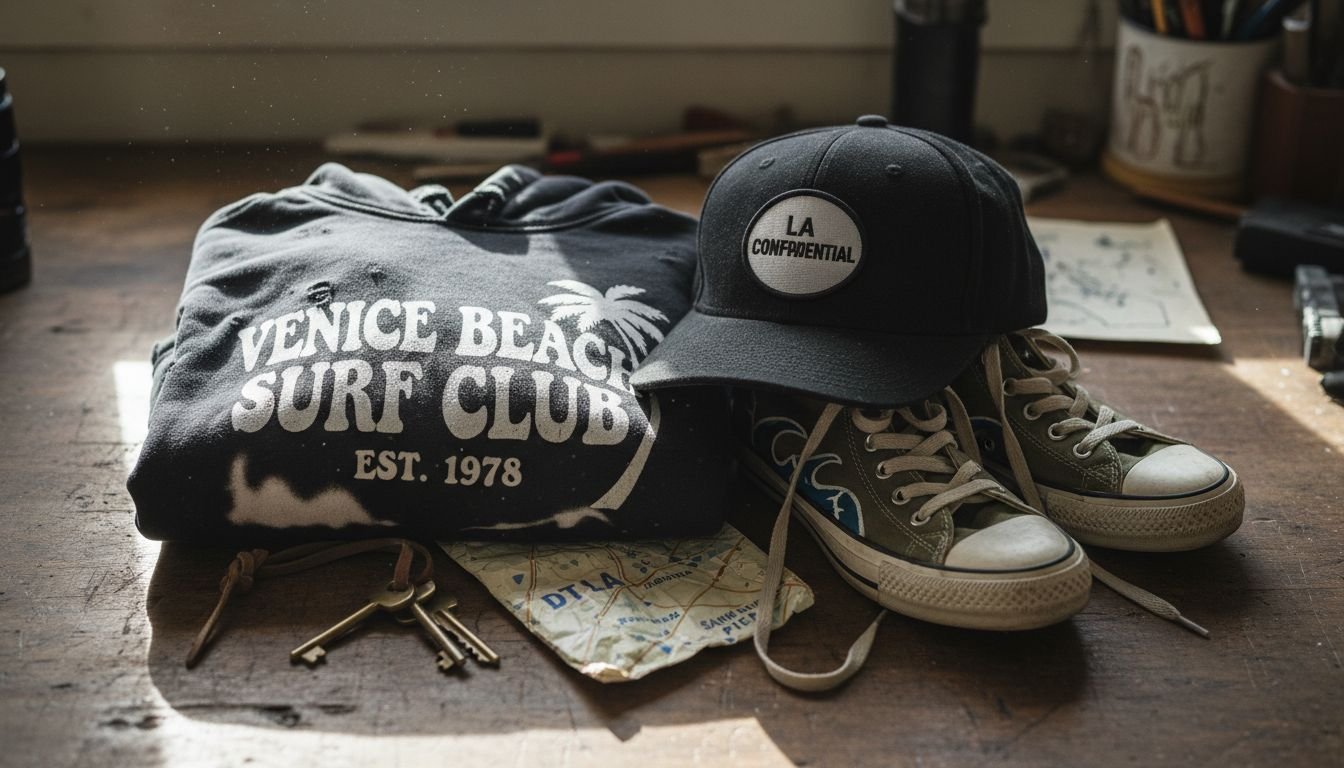
Then comes comfort, which separates authentic California streetwear from pretentious fashion that prioritizes looking good over actually living in your clothes. Streetwear originated from skate parks and beaches where people needed gear that could handle movement, weather, and real life. That foundation never disappeared. You’ll find oversized t-shirts that breathe, hoodies thick enough to keep you warm at a late-night event but light enough to tie around your waist when you warm up, and sneakers designed for actual walking, not just Instagram photos. This comfort isn’t accidental. It’s intentional design that respects how you actually wear clothes. You’re not sacrificing mobility or breathability for style. The whole point is that comfort and style coexist. When you’re choosing streetwear, especially pieces that celebrate your local area, you want something that feels good enough to become part of your everyday rotation, not something you wear once and shelve.
Finally, there’s exclusivity, which drives the culture forward and creates genuine desirability. California streetwear thrives on limited releases and drop culture. When a piece drops in limited quantities, it doesn’t stick around forever. You either catch it or you miss it. This scarcity breeds connection and community. People talk about upcoming drops, camp out for releases, and celebrate when they score something before it’s gone. Limited releases and collaborations build exclusive appeal within streetwear culture, driving hype and social capital. Exclusivity makes the culture feel alive and urgent rather than stale. But here’s the thing: exclusivity doesn’t mean expensive. It means thoughtful. A limited run of custom apparel celebrating Fresno’s specific folklore carries more exclusivity and meaning than mass-produced generic California gear sold at chain stores. The exclusivity comes from scarcity, intentionality, and cultural relevance, not price tags.
Pro tip: When hunting for authentic California streetwear, prioritize pieces with meaningful graphics tied to your actual region, ensure the fit and fabric genuinely suit your lifestyle, and don’t sleep on limited releases from creators who understand your community’s real stories rather than chasing major brand drops.
Regional Influences and Folklore Motifs
California streetwear doesn’t exist in a vacuum. It’s woven directly from the regional stories, cultural heritage, and local legends that define specific areas. Southern California draws heavily from Chicano culture, with its rich visual language of street art, graffiti, and tattoo motifs that communicate identity, resistance, and community pride. The Bay Area brings its own flavor: indigenous influences, counterculture history, and a diverse blend of communities that refuse homogenization. When you move inland toward Fresno and the Central Valley, the cultural tapestry shifts again, incorporating agricultural heritage, working-class identity, and regional folklore that most mainstream fashion completely ignores. Regional cultural elements like Chicano art and street motifs create distinct streetwear styles, embedding local narratives directly into the fabric. These aren’t decorative touches. They’re the entire foundation. A streetwear piece celebrating your region becomes a wearable archive of your community’s story.
Folklore and cryptid culture represent one of the most powerful forms of regional identity in California streetwear today. Every region has its legends. The Bay Area has the Mothman sightings. Fresno has the Fresno Nightcrawlers. Northern California has Bigfoot. These aren’t just spooky stories told around campfires. They’re part of regional identity. When you wear apparel featuring these cryptids or local folklore, you’re tapping into something deeper than fashion. You’re claiming connection to your region’s mysterious heritage, to the collective mythology that binds community members together. Folklore and indigenous iconography integrate into contemporary streetwear aesthetics, creating layered identity that honors diverse influences and local narratives. A Fresno Nightcrawlers hoodie isn’t just merchandise. It’s a statement that you know your region’s legends, that you belong to a specific place with specific stories that matter. This approach transforms streetwear from generic apparel into a living cultural document.
What makes this particularly relevant for young adults in Fresno and the Bay Area is that mainstream fashion has historically excluded your regional identity. You won’t find your local folklore celebrated at chain stores. You won’t see your neighborhood’s actual history represented in mass-market collections. This is where authentic California streetwear steps in. When independent creators develop apparel specifically designed around regional influences, they’re not just selling clothing. They’re validating your community’s significance. They’re saying your stories matter enough to be worn. They’re creating space for identities that the fashion industry typically ignores. Whether it’s incorporating actual local landmarks into designs, featuring regional cryptid legends, or pulling color palettes and artistic styles from your area’s cultural heritage, these details transform a simple t-shirt or hoodie into something that represents who you actually are.
The intersection of regional influences and folklore motifs in California streetwear also speaks to authenticity in a globalized fashion world. When you choose apparel grounded in specific regional narratives, you’re rejecting the homogenized aesthetic that erases local distinction. You’re voting for creators who understand that your city has its own character, its own history, its own stories worth celebrating. This matters especially in the Central Valley and Bay Area, where diverse communities have rich, complex histories that deserve representation through fashion. A piece of streetwear that celebrates genuine regional culture becomes a form of resistance against cultural erasure.
Pro tip: Seek out streetwear featuring actual folklore, landmarks, and cultural elements specific to your region rather than generic California imagery, as these pieces carry deeper cultural meaning and directly support creators invested in your community’s authentic stories.
When people talk about California streetwear on a global scale, certain names immediately come up. Stüssy, Supreme, and Off-White aren’t just brands. They’re institutions that shaped how the entire world understands streetwear. But here’s what matters for you as someone invested in authentic regional culture: these mega-brands often operate on a scale so massive that they’ve become removed from the grassroots communities that birthed streetwear in the first place. They’re culturally significant, absolutely. Understanding their history helps you appreciate where contemporary streetwear came from. But they’re not necessarily the brands capturing your actual regional story or cryptid folklore. The legendary figures behind these brands, however, offer valuable lessons about how to build authentic movements through apparel.
Shawn Stüssy deserves reverence as the godfather of modern streetwear. He started by creating surfboards and apparel for the actual surf community in California during the 1980s. His genius wasn’t inventing something entirely new. It was recognizing that the people living specific lifestyles needed clothing that reflected their identity and values. He didn’t chase trends. He created them by staying true to his community’s ethos. James Jebbia took similar principles when he founded Supreme in 1994. He understood that skateboarding culture needed a hub, a space where skateboarders could gather and celebrate their identity through limited releases and exclusive drops. Supreme transformed into a cultural icon through strategic community building and limited releases, proving that exclusivity and authenticity could coexist. Virgil Abloh, through Off-White, demonstrated that streetwear could bridge high fashion and street culture without sacrificing credibility. What connects these figures isn’t their market dominance. It’s their commitment to understanding specific communities and creating apparel that spoke directly to lived experience.
The critical insight here is that these major figures succeeded by staying connected to the cultural communities they served. Stüssy didn’t create apparel for people who had never surfed. Supreme didn’t design for people who’d never stepped on a skateboard. They built from within, earned credibility through authenticity, and only then reached broader audiences. California streetwear leaders maintained grounding in local identity and cultural storytelling while scaling their influence globally. This approach is why their work still matters decades later. They didn’t dilute their message for mainstream acceptance. They stayed true to community values and let those values attract followers organically. For young adults in Fresno and the Bay Area, this model offers direction. The most meaningful California streetwear doesn’t come from brands chasing global recognition. It comes from creators who understand your specific region, who’ve earned credibility within your community, and who create apparel celebrating authentic local stories. When independent designers develop pieces around regional folklore, local landmarks, and genuine cultural identity, they’re following the same blueprint that made Stüssy, Supreme, and Off-White culturally significant.
The distinction between mega-brands and regional creators matters now more than ever. Yes, Supreme drops limited releases that sell out in minutes. Yes, Off-White collaborations command premium prices. But these brands exist at a distance from your actual life. A Stüssy piece from 1995 connected you to surf culture. A Supreme collaboration connected you to skateboarding identity. A regionally-focused streetwear piece connects you to your neighborhood’s specific folklore, to the cryptid legends that haunt your region, to the landmarks that define your city. That’s the real evolution of what these pioneers started. They proved apparel could communicate identity. Contemporary regional creators are taking that lesson and applying it to your actual community. When you choose streetwear celebrating Fresno’s real stories over generic California imagery from global brands, you’re participating in the same authentic, grassroots approach that made these legendary figures legendary in the first place.
Pro tip: Study how legendary figures like Shawn Stüssy and James Jebbia built authentic communities through limited releases and genuine cultural storytelling, then seek out regional creators applying these same principles to your specific area’s folklore and landmarks rather than chasing major brand drops.
Why Local Identity Drives California Streetwear
Local identity isn’t just part of California streetwear. It’s the entire engine that keeps the culture alive and meaningful. Without connection to specific places, specific communities, and specific stories, streetwear becomes hollow. It becomes just another product designed for maximum profit and minimum authenticity. But when streetwear is rooted in genuine local identity, it transforms into something with actual cultural weight. Local identity fundamentally embodies the voice of communities and their regional values, reflecting histories and social realities that matter to the people living them. A t-shirt celebrating your neighborhood’s real folklore carries meaning that mass-produced generic apparel never will. A hoodie featuring your city’s actual landmarks communicates belonging in ways that billboard advertising cannot replicate. This is why young adults in Fresno and the Bay Area gravitate toward regional streetwear. You’re not just buying clothing. You’re purchasing a tangible connection to your community’s identity.
The relationship between place and identity in California streetwear runs deeper than surface aesthetics. It’s about cultural resistance and preservation. California streetwear draws from diverse cultural and geographic landscapes, driving creative expression and preserving unique cultural languages through fashion. When mainstream culture ignores your region’s stories, when commercial fashion erases your community’s existence, streetwear becomes an act of rebellion. Wearing apparel that celebrates your actual place says you refuse to be invisible. You refuse to accept generic representations of California that flatten the Bay Area’s counterculture history, Fresno’s agricultural heritage, and each region’s distinct cultural DNA into one homogenized blob. This is why local identity drives innovation in streetwear. Communities creating pieces specifically for themselves, grounded in their own folklore and geography, invent new visual languages and new ways of communicating belonging. They’re not following global trends. They’re setting them by staying fiercely true to where they’re from.
What makes this particularly powerful for your generation is that local identity through streetwear nurtures something increasingly rare: a genuine sense of belonging that isn’t manufactured by algorithms or marketing departments. Streetwear rooted in local identity fosters cultural pride and a sense of belonging while protecting authenticity and spirit as an expression of cultural resistance and collective heritage. When you wear a piece celebrating your region’s cryptid folklore or local landmarks, you’re joining a community of people who share that specific identity. You’re acknowledging that your place matters. That your stories matter. That the people around you, with their unique struggles and celebrations, deserve representation through fashion. This isn’t narcissism. It’s the opposite. It’s recognizing that authentic culture emerges from places, not from corporate vision statements. It’s understanding that the most meaningful fashion comes from communities speaking to themselves, not from brands speaking at communities.
The economic and cultural implications of local identity driving streetwear are significant. When you choose regionally-focused apparel over mass-market alternatives, you’re supporting creators embedded in your community rather than distant corporations. You’re voting for a model of fashion that values authenticity over quarterly earnings. You’re participating in an economy where cultural value flows back to the communities that created it, where veterans and local artists can build sustainable businesses around regional pride and cryptid folklore. This isn’t naive idealism. It’s recognizing how culture actually works at the grassroots level. The streetwear movement emerged from communities creating for themselves, not from fashion corporations creating for consumption. Local identity driving contemporary California streetwear represents a return to those foundational principles. When you understand why local identity matters this deeply, you start seeing streetwear differently. You see it not as trend but as cultural documentation. Not as product but as community voice.
Pro tip: Before purchasing any piece of streetwear, ask yourself whether it connects you to an actual community, celebrates genuine regional stories, and comes from creators invested in your specific area rather than generic California imagery designed for maximum appeal.
Here’s a summary of how local identity shapes California streetwear versus mainstream fashion:
| Aspect |
Local California Streetwear |
Mainstream Fashion |
| Source of Inspiration |
Community stories, folklore |
Global trends, runways |
| Design Focus |
Regional details, authenticity |
Mass appeal, generic imagery |
| Role in Community |
Fosters pride, belonging |
Rarely cultivates local ties |
| Economic Impact |
Supports local creators |
Profits major corporations |
Celebrate Authentic California Streetwear Rooted in Local Pride
Are you looking to express your true connection to California through apparel that truly reflects your community’s rich culture and unique folklore? This article highlights the importance of wearing streetwear that tells real stories—from Fresno’s cryptid legends to Bay Area’s cultural landmarks. If you want streetwear that goes beyond generic imagery and embraces meaningful design with comfort and exclusivity, explore our Heavyweight Cotton Tees crafted for everyday wear and authentic style.
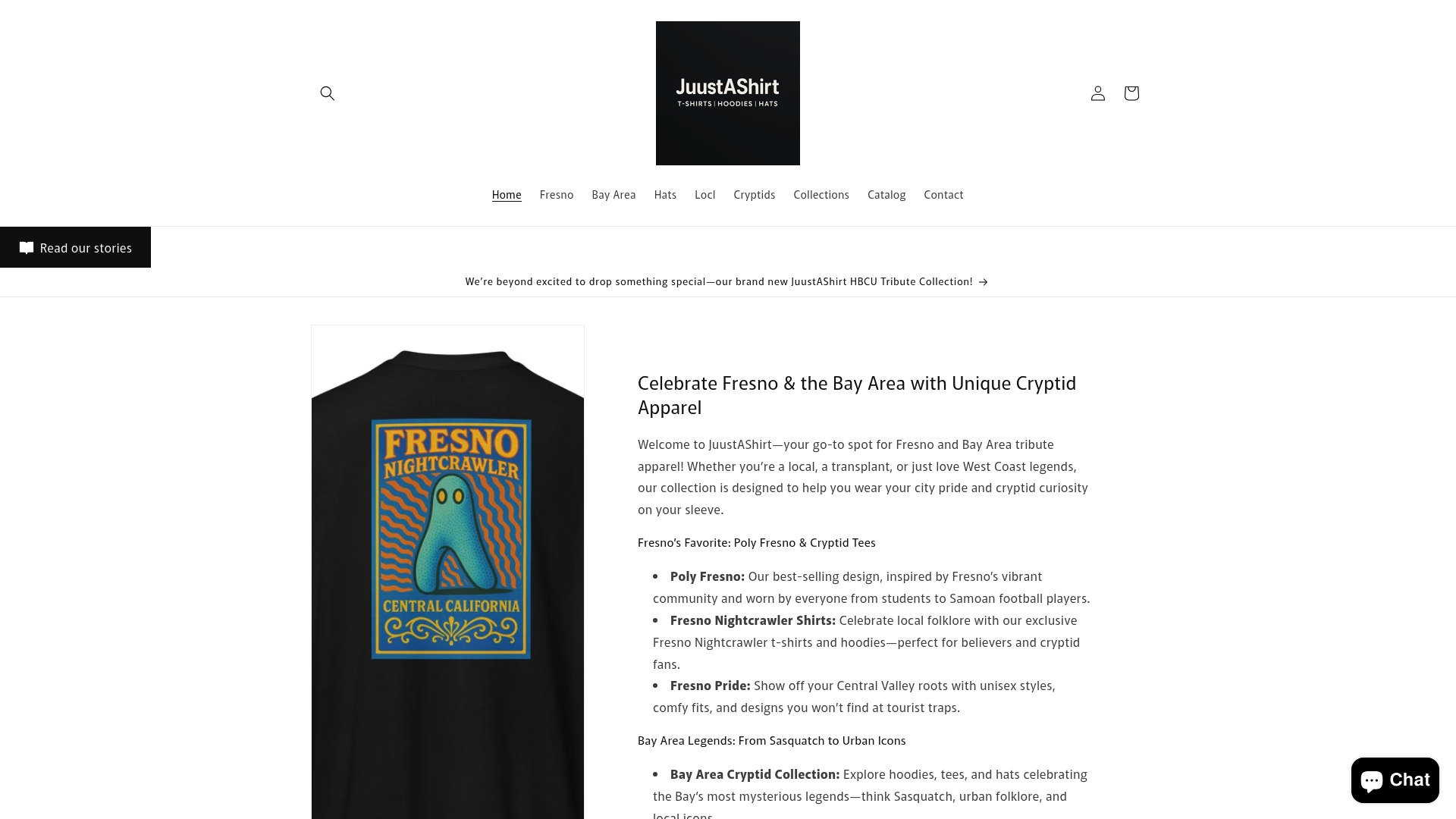
Discover original designs created by a veteran-owned, local business dedicated to celebrating California’s diverse neighborhoods and regional identities. Join a community that honors the real California through apparel that speaks to you, supports local creators, and preserves cultural storytelling. Start wearing your story today at JuustAShirt and transform your wardrobe with genuine pieces representing your place and pride.
Frequently Asked Questions
What is California streetwear?
California streetwear is a cultural movement that originated from the streets of California, deeply intertwined with communities, hip-hop culture, skate, and surf aesthetics. It reflects personal style, local pride, and social commentary.
How does California streetwear differ from mainstream fashion?
Unlike mainstream fashion, which is often dictated by designer labels and mass production, California streetwear is rooted in DIY ethics and grassroots movements that value authenticity, community expression, and personal narratives over commercial trends.
What elements are essential in California streetwear?
California streetwear typically features bold graphics, functional comfort, and a focus on exclusivity. Each piece is designed to tell a story about identity and community rather than to simply serve as a fashion statement.
Why is local identity important in California streetwear?
Local identity is crucial in California streetwear as it connects individuals to their specific communities, cultures, and stories. This connection adds depth and meaning to the clothing, transforming it from just a garment into a wearable expression of pride and belonging.
Recommended


