Every region carries stories hidden in its landscapes, traditions, and local legends. For Fresno and Bay Area residents who value cultural pride and mysterious folklore, designing a T-shirt is more than a fashion statement. It becomes a way to honor regional cultural elements and connect with community roots that blend tradition and modern style. Discover how to turn authentic history and iconic symbols into wearable art that celebrates your California identity.
Table of Contents
Quick Summary
| Key Takeaway |
Explanation |
| 1. Research Local Culture |
Dive deep into local history, folklore, and traditions to uncover unique elements for your design. |
| 2. Identify Authentic Symbols |
Create a visual inventory of themes and icons that resonate emotionally with the community. |
| 3. Develop Thoughtful Artwork |
Balance creativity and cultural authenticity by reimagining traditional elements for modern design. |
| 4. Choose Colors and Fonts Wisely |
Select palettes and typography that reflect local characteristics and evoke genuine emotions. |
| 5. Test and Refine Your Design |
Gather diverse feedback from community members to enhance emotional connection and authenticity. |
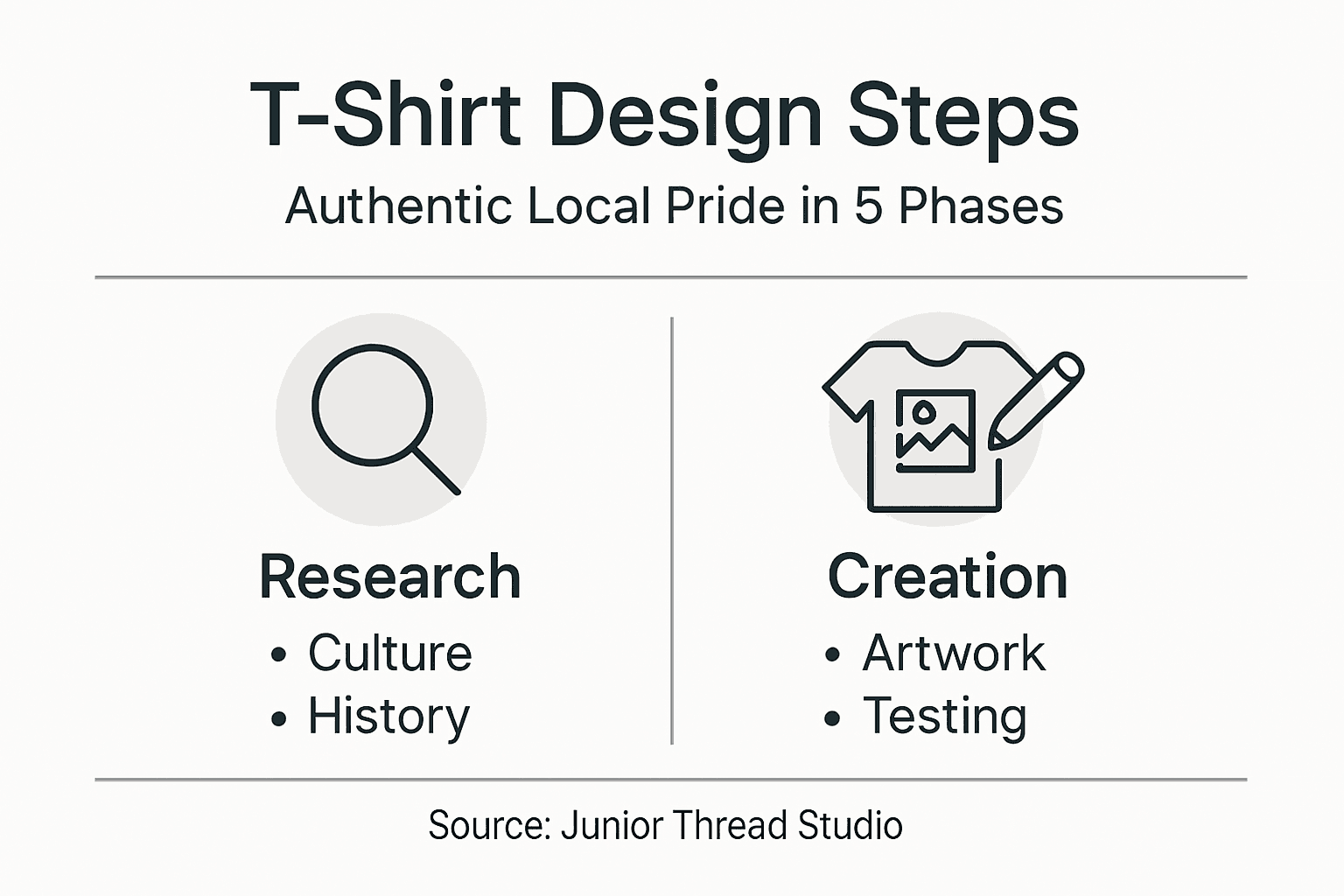
Step 1: Research Local Culture and Folklore
Designing a truly authentic regional T-shirt starts with deep research into local history and cultural identity. Your goal is to uncover unique stories, symbols, and traditions that capture the essence of your specific geographic area. Regional cultural elements represent more than just surface level aesthetics they reflect complex historical narratives and community experiences.
Begin your research by exploring multiple sources beyond standard internet searches. Visit local historical societies, libraries, and museums to discover artifacts, photographs, and archival documents that reveal distinctive regional characteristics. Talk to community elders and long-time residents who can share oral histories and personal perspectives about local traditions. Look for recurring visual motifs like regional wildlife, geographic landmarks, cultural symbols, or unique architectural styles that could translate into compelling graphic designs. Urban design research emphasizes the importance of capturing authentic local identity through creative representation.
Here’s a summary of where to find authentic regional inspiration for your T-shirt design:
| Inspiration Source |
Unique Value |
Example Outcome |
| Local museums |
Access to artifacts and archives |
Historic symbols in design |
| Community elders |
Personal oral histories |
Unique traditions depicted |
| Neighborhood architecture |
Visual motifs and patterns |
Iconic building graphics |
| Traditional crafts |
Authentic colors and techniques |
Distinctive pattern usage |
While gathering information, take detailed notes about potential design elements and themes. Document specific colors, patterns, and symbolic representations that feel genuinely connected to your region. Pay attention to historical context and avoid stereotypical or generic representations that might feel inauthentic. Your goal is to create a design that resonates with local pride and tells a meaningful story about your community.
Pro tip: Consider joining local historical or cultural Facebook groups to network with knowledgeable community members who can provide insider perspectives on regional symbolism and storytelling.
Step 2: Identify Resonant Themes and Icons
With your initial research complete, the next critical step is identifying specific visual elements that authentically capture your region’s unique cultural narrative. The goal is to select themes and icons that go beyond surface aesthetics and truly represent the deeper spirit of your community. Indigenous cultural symbols provide powerful tools for communicating regional identity through graphic design.
Start by creating a visual inventory of potential design elements that feel genuinely connected to your area. This might include native wildlife species, significant geographic landmarks, traditional craft patterns, architectural motifs, or historical symbols that resonate with local experiences. Look for imagery that triggers an emotional response from community members something that makes people say “That’s so us.” Pay close attention to visual elements that appear repeatedly in local art, historical documents, and community spaces. Design evidence suggests that truly effective design captures complex cultural meanings through carefully selected iconic representations.
While exploring potential themes, remain mindful of avoiding stereotypical or cliched representations. Your goal is to create a design that feels nuanced and authentic not a generic postcard version of your region. Consider consulting local artists, historians, or cultural experts who can provide deeper insights into symbolism and visual storytelling. Sketch out multiple concept variations and get feedback from community members to ensure your design genuinely reflects collective identity and pride.
Pro tip: Create a mood board with collected visual references to help you visualize how different cultural elements might interact and communicate your regional story.
Step 3: Create Authentic Regional Artwork
Transforming your researched themes into compelling visual designs requires a thoughtful approach that balances creativity with cultural authenticity. Regional cultural art design demands a nuanced understanding of how historical motifs can be reimagined for contemporary expression. Your artwork should feel like a living conversation between traditional symbolism and modern graphic design techniques.
Start by sketching multiple concept variations that explore different ways of interpreting your chosen regional themes. Consider how traditional elements like indigenous patterns, local landscape silhouettes, or historical iconography can be stylized to create a fresh graphic language. Experiment with color palettes that reflect your region’s natural environment or cultural heritage. Museum exhibition design approaches emphasize the importance of creating spatially coherent artworks that tell a meaningful cultural narrative. This means every visual element should feel intentional and connected to your larger regional story.

As you develop your design, focus on simplicity and visual impact. The most powerful regional artwork often communicates complex cultural experiences through clean, memorable graphics. Seek feedback from community members who can provide authentic perspectives on how well your design captures the local spirit. Remember that true authenticity comes from deep understanding and respectful representation not from superficial stereotypes or generic imagery.
Pro tip: Digitize your initial hand sketches and use graphic design software to refine your artwork, allowing you to experiment with different scale and color variations efficiently.
Step 4: Choose Colors and Fonts for Local Appeal
Selecting the right colors and fonts is crucial for creating a T-shirt design that resonates authentically with your regional identity. Colors from traditional art possess powerful expressive qualities that can communicate complex cultural narratives through visual language. Your design should feel like a visual dialogue that speaks directly to local community members.
Start by exploring color palettes that reflect your region’s unique landscape, cultural heritage, or historical significance. Consider the natural environment around you geographic features like mountain ranges, coastal tones, desert landscapes, or urban color schemes can provide rich inspiration. Examine traditional local artworks, textiles, or architectural elements to identify authentic color combinations that feel genuinely representative. Regional visual language research demonstrates that typography and color choices can profoundly influence how viewers perceive cultural identity. Choose fonts that either echo historical local signage or represent contemporary interpretations of regional graphic design styles.
Pay attention to the emotional and cultural resonance of your color and font selections. Avoid generic or commercially trendy choices that might dilute your design’s authenticity. Test your color combinations with local community members to ensure they evoke the right emotional response and truly capture the spirit of your region. A successful design will feel both familiar and innovative creating a visual experience that makes locals proud and intrigues outsiders.
Pro tip: Use color palette generator tools that allow you to sample colors directly from local photographs to ensure maximum regional accuracy.
Step 5: Test and Refine Your Design
Designing a regional T-shirt is an iterative process that requires careful evaluation and multiple rounds of feedback. Design testing methods offer structured approaches to ensure your artwork resonates authentically with your target audience. Your goal is to transform your initial concept into a design that truly captures local pride and visual appeal.
Start by creating several design variations and presenting them to a diverse group of local community members. Look for individuals who represent different demographics within your region to get comprehensive feedback. Pay attention to nuanced responses about color selection, graphic placement, and emotional resonance. Online T-shirt design platforms suggest that user testing across different groups can significantly improve design satisfaction. Consider hosting small focus groups or creating digital surveys where participants can provide detailed insights about your design elements.
Be prepared to make strategic adjustments based on community input. Sometimes minor tweaks in font size, color intensity, or graphic positioning can dramatically improve your design’s impact. Look for feedback that speaks to authenticity and emotional connection rather than purely aesthetic comments. A successful regional design should feel like a visual story that makes locals proud and curious outsiders want to learn more about your community.
This table compares two key approaches for ensuring local cultural resonance in your T-shirt artwork:
| Approach |
How It Works |
Impact on Authenticity |
| Community feedback |
Gather opinions from local residents |
Enhances emotional connection |
| Expert consultation |
Work with artists/historians |
Adds depth and accuracy |
Pro tip: Create mockup images of your design on actual T-shirts to help participants visualize the final product more accurately.
Designing regional T-shirts that capture local pride means translating cultural stories, symbols, and traditions into wearable art. At JuustAShirt, we understand the challenge of creating authentic designs that resonate deeply with your community while avoiding clichés and stereotypes. Our collection of Heavyweight Cotton Tees - JuustAShirt offers premium quality apparel perfect for showcasing your unique regional identity through meaningful and locally inspired graphics. Each design is crafted to honor real places and legendary folklore, making your T-shirt a true expression of cultural connection and pride.
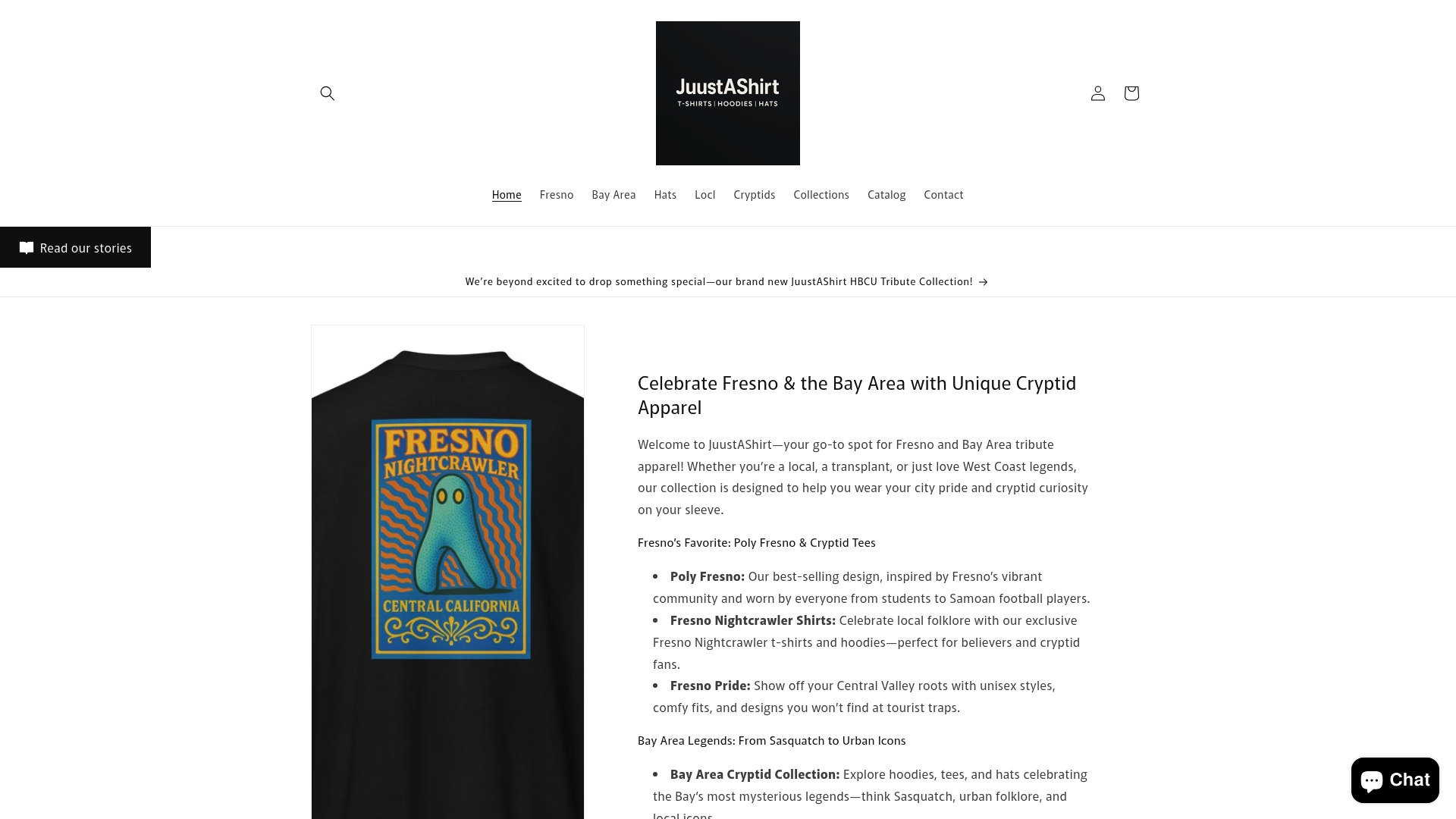
Ready to wear your story and support local craftsmanship? Explore our full selection inspired by regional heritage at JuustAShirt and dive into designs that speak to your area’s spirit. Whether you live in California or have a passion for regional folklore, now is the perfect time to embrace a design that makes you proud. Start your authentic regional wardrobe today and feel the difference that true cultural expression brings.
Frequently Asked Questions
How can I start researching local culture and folklore for my T-shirt design?
Begin by exploring local museums, libraries, and historical societies to gather artifacts and stories that represent your region. Engage with community elders to learn about local traditions and narratives. Take notes on specific colors, patterns, and icons that you find inspiring.
What steps should I take to identify themes and icons for my regional T-shirt design?
Create a visual inventory of elements that resonate with your community, such as local wildlife, geographic landmarks, and historical symbols. Sketch variations of these themes to see how they can be integrated into your design while avoiding stereotypes.
How do I create authentic regional artwork for my T-shirt?
Transform your researched themes into design concepts by sketching different interpretations that merge traditional symbolism with modern aesthetics. Refine your artwork based on feedback from community members to ensure it accurately represents the shared identity of your region.
What should I consider when choosing colors and fonts for my T-shirt design?
Select colors that reflect your region’s landscape and cultural heritage, and choose fonts that evoke local style or historical signage. Test your color and font choices with community members to ensure they resonate emotionally and feel relevant to your audience.
How can I test the design of my regional T-shirt effectively?
Present your design variations to a diverse group of local community members and collect their feedback on various aspects of the design. Adjust elements based on their input to enhance the emotional connection and authenticity of your design, improving overall impact.
Incorporating community feedback can significantly enhance the emotional connection of your design, making it feel more relevant and genuine. Actively seek input through surveys or focus groups to gather insights and make adjustments that resonate with local pride.
Recommended


